If you’ve ever watched a spot welding machine in action—say, on a car assembly line, a kitchen appliance factory, or even a custom metal fabrication shop—you might have noticed that the machines don’t always move at the same speed. What many people don’t realize is that one tiny, adjustable setting is responsible for a huge part of that consistency, strength, and efficiency: welding frequency. As a spot welding machine supplier, I work with fabricators, automotive teams, and appliance manufacturers every day, and I can tell you that getting this setting right is the difference between a part that holds up for 10 years and one that fails in a month. Spot Welding Machine
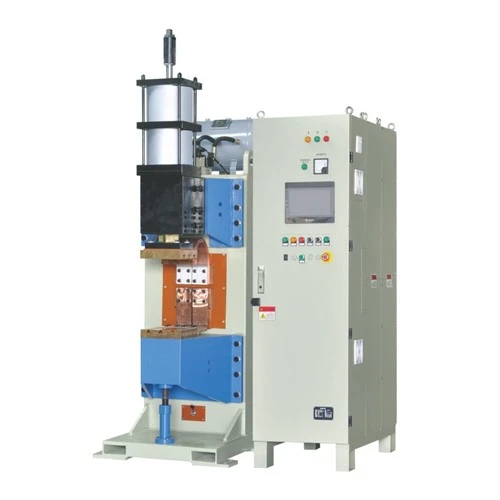
Let’s start with the basics. Spot welding works by passing a high current through two metal sheets clamped between two copper electrodes. The heat generated by this current melts the metal at the contact point, and pressure from the electrodes fuses the two sheets together into a single spot weld. Welding frequency, in this context, refers to how often that current cycles on and off (measured in hertz, or Hz) during each weld. It’s not the same as the overall cycle time of the machine (which is how quickly it can move from one weld spot to the next on a part)—frequency is the internal rhythm of the current that makes the weld happen.
A lot of new operators think “higher is better” when it comes to frequency, but that’s a myth. Over the years, I’ve seen two common mistakes: teams running too low a frequency that leads to weak welds, and teams cranking the frequency up to cut cycle time, only to blow out electrodes or ruin base metal. The sweet spot? It depends entirely on the material you’re welding, its thickness, and your production goals.
Let’s break down how frequency impacts core performance, starting with weld strength. When frequency is too low, the current takes longer to build up the heat needed to melt the metal. This leads to “cold welds”—spots where the metal isn’t fully fused, so the bond is weaker than the base material. For thin-gauge steel, say 0.5mm used in appliance panels, a 50 Hz frequency gives enough sustained heat to create a solid nugget (the fused metal core) without wasting energy. But if you’re welding thicker material, like 3mm steel for truck frames, you need a higher frequency—around 100 Hz—to deliver the current faster, preventing the heat from dissipating too quickly into the surrounding metal before the weld forms. Run 50 Hz on thick metal, and you’ll end up with a shallow nugget that can’t handle the torque or stress of a truck’s daily operation.
On the flip side, too high a frequency causes something called “current constriction.” The rapid cycling of the current means it only touches the electrodes for tiny bursts, so the heat doesn’t distribute evenly across the weld zone. This can lead to uneven melting, where parts of the weld nugget are overheated and others are underheated, creating a brittle spot. I saw this happen last year with a customer who was welding aluminum sheets for outdoor patio furniture. They set their machine to 200 Hz to speed up production, thinking aluminum needed faster heat. But aluminum conducts heat much better than steel, so the high frequency caused the weld to cool too quickly, resulting in cracks that made the furniture frames fall apart during stress tests. It cost them $12,000 in rejected parts before they adjusted the frequency to 80 Hz—right in the middle of the recommended range for aluminum, per our machine’s specifications.
Next, there’s energy efficiency to consider, which is a big deal for high-volume production shops. I recently worked with a automotive parts supplier who was running 120 machines 12 hours a day, 6 days a week. When they switched from 100 Hz to 60 Hz for their 1mm steel body panels, they cut their electricity bill for the welding department by 18% in the first month. Why? Lower frequency means less energy lost to the electrodes and the surrounding environment. High-frequency current has a tendency to arc between electrodes when they’re not perfectly aligned, wasting energy and wearing out electrodes faster. The 18% savings added up to over $21,000 a year for them—enough to fund a new material testing lab for their quality control team. That’s a huge win, and it all came down to getting frequency aligned with their material.
Then there’s electrode lifespan, which is a hidden cost most shops don’t account for. Copper electrodes are expensive—they can cost $50 to $150 a pair, depending on size and coating. When frequency is too high, the rapid current cycling causes more electrical resistance at the electrode tip, leading to faster wear, pitting, and deformation. I’ve seen operators replace electrodes every 2 weeks when they run high frequency on thin aluminum, but when they adjusted frequency to the right level, electrodes lasted 6 to 8 weeks. For a shop running 20 machines, that’s 15 fewer electrode changes a month, 4 extra hours of production time per week, and thousands in annual savings.
Cycle time—how fast you can move from one weld to the next on a part—is another area where frequency matters, but it’s often misunderstood. Some shops think higher frequency means faster welds, but that’s only true up to a point. A 50 Hz weld takes about 0.2 seconds to form, while a 150 Hz weld takes about 0.08 seconds. That’s a big difference for small, repetitive parts, like the metal clips used in battery casings. But if you’re welding large, irregular parts like car doors, you’re limited by how fast you can move the machine, not how fast the weld forms. Cranking frequency to cut weld time when cycle time is limited just leads to wasted energy, as we saw with the automotive supplier. It’s about balancing the two: adjust frequency to meet your weld time needs, but don’t ignore your overall cycle constraints.
Material compatibility is the final piece of the puzzle, and it’s where most new operators go wrong. Different metals have different thermal conductivity and melting points, so their ideal frequency ranges are not the same. Let’s break it down:
- Carbon steel, the most common material for structural parts, works best at 50 to 150 Hz. Thin steel (under 1mm) leans toward 80 Hz, while thick steel (over 2mm) needs 120 to 150 Hz to get enough heat fast.
- Aluminum, which conducts heat 5 times faster than steel, needs lower frequencies—60 to 90 Hz. Higher frequency causes the weld to cool too quickly, leading to cracks and weak bonds.
- Stainless steel, which has a higher melting point than carbon steel, needs a slightly higher frequency—80 to 120 Hz—because it takes more heat to melt, and lower frequency would lead to cold, weak welds.
- Galvanized steel, which has a zinc coating, needs even care. The zinc melts at a lower temperature, so high frequency can cause the coating to burn, leaving the weld spot corroded. Stick to 50 to 80 Hz for galvanized steel to prevent that burn-off.
As a spot welding machine supplier, I spend a lot of time on site with customers testing frequency, and I always tell them to start with a simple rule: test 50 Hz, then adjust up or down based on their material and part. I bring portable frequency testers with me on every service call, and we do small test welds on scrap material to measure weld strength before adjusting the machine for full production. One customer, a small fabrication shop, had been having trouble with their welds failing in their backyard bird feeders. They were welding 0.4mm galvanized steel at 100 Hz, which was burning the zinc coating. We dropped frequency to 60 Hz, tested the welds with a pull tester, and the failure rate dropped from 12% to 0% immediately. That’s the kind of difference getting frequency right can make.
It’s also important to note that frequency isn’t a standalone setting. You have to pair it with current, pressure, and weld time. If you increase frequency without adjusting current, you might not generate enough heat to melt the metal. If you increase pressure, you can compensate for a slightly lower frequency, but it’s always better to get frequency right first. I see a lot of shops skipping this step, thinking frequency is just a “set it and forget it” number, but it’s actually a dynamic setting that changes as your production needs change. If you switch to a thicker material, adjust frequency. If you change to a different metal, adjust frequency. Even electrode size can affect frequency—smaller electrodes need a slightly higher frequency to generate enough heat at the tip.
I get asked all the time: “What’s the perfect frequency for any weld?” The answer is never one-size-fits-all, but as a supplier, I can tell you that most production shops see the biggest gains when they match frequency to their specific material and part requirements. It’s not about running the highest frequency possible to be fast, or the lowest to save energy—it’s about finding the middle ground that gives you strong, consistent welds, low electrode wear, and energy efficiency.
If you’re dealing with weld defects, high electrode replacement costs, or slow production cycles, frequency is likely the hidden culprit. I’ve helped hundreds of customers troubleshoot these exact issues by adjusting their frequency, and most of them see results within the first week. There’s no guesswork, no complicated math—just testing scrap, measuring results, and tweaking the setting until it’s right for your operation.
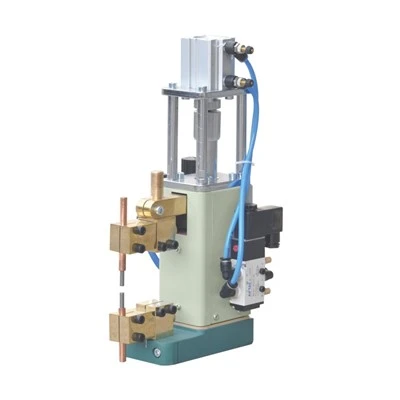
If you’re ready to get a handle on your spot welding machine’s performance and cut costs while improving quality, let’s connect to discuss your specific production needs. I can help you test your current settings, recommend the right frequency range for your materials, and even share tips for adjusting other settings to work in tandem with frequency.
Spot Welding Machine References
- ANSI/AWS D8.9M:2019, Specification for Resistance Spot Welding of Automotive Body Structures
- International Institute of Welding (IIW) Document IIW-III-1571-02, Frequency Effects in Resistance Spot Welding of Thin Metals
- MetalForming Magazine, 2021, “Energy Efficiency in Resistance Welding: The Role of Frequency”
- Welding Journal, 2020, “Electrode Wear and Its Correlation to Welding Frequency in Aluminum Spot Welding”
- ASM International, 2018, “Resistance Welding Processes: Frequency and Thermal Distribution in Weld Zones”
Dongguan Huineng Welding Equipment Co., Ltd.
We are one of the most experienced spot welding machine manufacturers and suppliers in China. With a professional production team, we offer a wide range of products with superior quality. Please feel free to buy customized spot welding machine at competitive price from our factory.
Address: 530 Guantai Road, Xitou Village, Houjie Town, Dongguan City, Guangdong Province
E-mail: fengshanggang75@126.com
WebSite: https://www.huinengwelder.com/
